
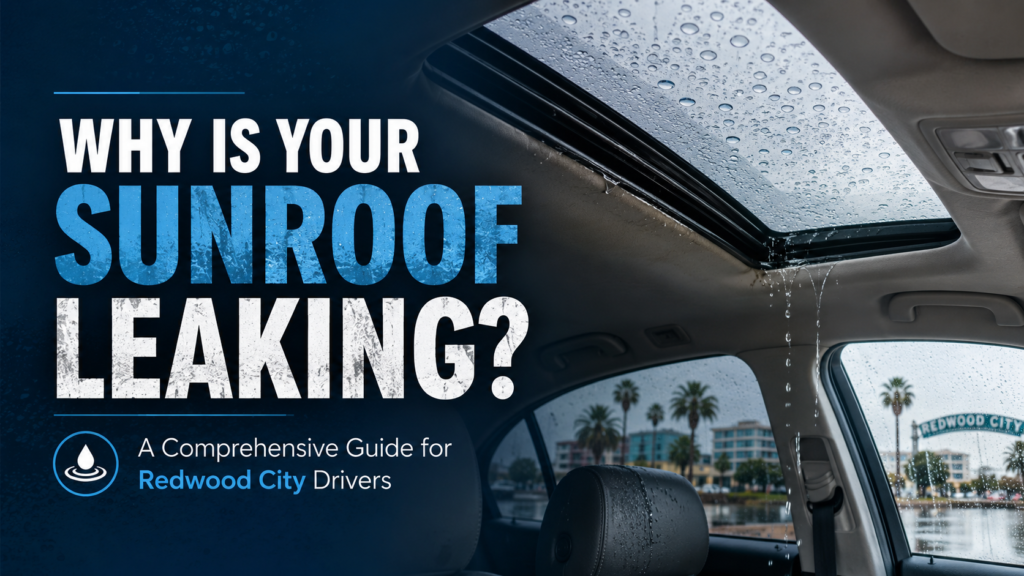
Few experiences are more frustrating for a driver than getting into a car after rain only to find wet seats, a damp headliner, or water dripping from the interior ceiling. If you live in Redwood City where the San Francisco Bay Area’s rainy season brings months of regular precipitation a leaking sunroof is not just an inconvenience; it can cause significant interior damage if left unaddressed.
Understanding why sunroofs leak and how the leaking occurs is the first step toward addressing the problem effectively. This guide walks through the mechanics of sunroofs, the most common causes of leaks, and what Redwood City drivers should know when seeking Sunroof Leaking Service Redwood City.
How Sunroofs Are Designed to Manage Water
Many drivers assume that a sunroof creates a watertight seal when closed and that any water intrusion is automatically a sign of failure. In reality, most factory sunroof designs intentionally allow a small amount of water to enter around the sunroof panel when it is closed and this is normal and by design.
The sunroof system includes a built-in drainage network designed to manage this water:
- A tray or pan beneath the glass panel collects water that seeps past the weatherstripping
- Four drainage tubes (one at each corner of the tray) carry this water down through the door pillars and out under the vehicle
- The weatherstripping around the perimeter of the glass creates a primary barrier that limits how much water enters the tray
When this system is functioning correctly, a small amount of water at the weatherstripping is harmlessly channeled away before it can reach the vehicle interior. Leaks occur when something disrupts this carefully engineered system.
People Also Ask: Common Questions About Sunroof Leaks
What Is the Most Common Cause of a Sunroof Leak?
Contrary to what many drivers assume, the most common cause of sunroof leaks is not a failed seal it is a clogged drain tube. The drainage tubes that carry water from the sunroof tray to the exterior of the vehicle can become blocked by:
- Debris accumulation: Leaves, pine needles, dirt, and other organic material that collects around the sunroof opening can wash into the drain tubes over time, gradually building up a blockage
- Biological growth: In humid climates or when organic debris remains in the tubes for extended periods, mold and algae growth can further restrict water flow
- Sediment buildup: Fine particulate matter can accumulate and eventually harden within the tubes
When a drain tube is blocked, the sunroof tray fills with water during rain and eventually overflows into the headliner, dripping from the interior ceiling or running down the pillars into the cabin. Redwood City’s rainy season creates ideal conditions for this type of blockage to manifest, often appearing suddenly after the first heavy rain of the season.
How Can You Tell if the Drain Tubes Are Clogged?
A simple test can help determine whether clogged drains are the source of a sunroof leak. With the sunroof closed, slowly pour a small amount of water directly around the sunroof frame. If the water is draining correctly, it will disappear quickly from the tray and not appear inside the vehicle. If water accumulates in the tray and eventually drips inside, the drains are likely blocked.
Attempting to clear drain tubes at home requires care. Some sources recommend using a thin, flexible wire or weed trimmer line to push through blockages. However, this must be done gently drain tubes are typically flexible plastic or rubber hoses that can be dislodged from their fittings if too much force is applied. A dislodged drain tube creates an immediate and potentially worse leak situation than the original blockage.
For a sunroof leaking service in Redwood City, professional technicians use controlled methods including compressed air and controlled water pressure to clear blockages without damaging the drain system.
What Role Do Weatherstrips and Seals Play in Sunroof Leaks?
The rubber weatherstripping that frames the sunroof glass creates the primary seal between the panel and the roof structure. Over time, this weatherstripping is subjected to:
- UV degradation from sun exposure, which causes rubber to dry, crack, and harden
- Physical wear from the movement of opening and closing the sunroof panel
- Chemical exposure from car washes and cleaning products
- Compression set, where the rubber loses its ability to spring back and create a tight seal
When weatherstripping fails, it may no longer create an adequate seal, allowing more water than the drainage system can handle to enter the tray or allowing water to bypass the tray entirely and enter the headliner directly. Replacing failed weatherstripping requires sourcing the correct part for the specific vehicle make, model, and year, and proper installation to ensure the new seal makes full contact around the entire perimeter.
Can Sunroof Misalignment Cause Leaks?
Yes sunroof panel misalignment is another common cause of leaks that is often overlooked. Most sunroofs have adjustment mechanisms that allow the glass panel to be positioned precisely relative to the roof frame. When a sunroof panel is out of alignment, gaps can appear at certain points around the perimeter, allowing water to enter directly rather than being managed by the weatherstripping.
Misalignment can develop from:
- Physical impacts (even minor bumps or a hail event)
- Wear on the sunroof track or mechanism over time
- Previous improperly performed repairs
Correcting misalignment requires access to the sunroof mechanism and careful adjustment using the manufacturer’s specifications. This is not a DIY task for most vehicle owners and is best performed by a qualified technician.
What Can Happen If a Sunroof Leak Is Left Unaddressed?
Water intrusion from a leaking sunroof can cause damage that extends well beyond the immediate wet spot. Consequences of an unresolved sunroof leak include:
- Headliner damage: The foam-backed fabric headliner can become saturated, causing sagging, staining, and odor. Headliner replacement is a significant cost
- Mold and mildew growth: Persistent moisture in the headliner, carpet, and interior surfaces creates conditions for mold growth, which can cause odors and health concerns
- Electrical system damage: Modern vehicles have wiring, sensor modules, control units, and other electronic components throughout the roof area and pillars. Water intrusion can cause short circuits, corroded connectors, and module failures
- Seat and carpet damage: Water that runs down from the roof area can saturate seats and carpet, causing staining and accelerating the deterioration of interior materials
For Redwood City drivers, where the rainy season can deliver significant rainfall over several months, a leaking sunroof that is not addressed early in the season can cause compounding damage throughout the winter.
Preventive Maintenance for Sunroofs
Preventing sunroof leaks is considerably easier and less costly than repairing them. Preventive measures that Redwood City drivers should consider include:
- Cleaning the sunroof tray and drain openings regularly, particularly in fall before the rainy season when leaf and debris accumulation is highest
- Cleaning and conditioning the weatherstripping with a rubber-safe protectant to slow UV degradation and maintain flexibility
- Having a qualified technician inspect and flush the drain tubes annually as part of routine vehicle maintenance
- Parking in a garage when possible to reduce UV exposure to seals and to keep debris out of the sunroof area
Being proactive about sunroof maintenance can prevent the costly and inconvenient experience of discovering a leak during a downpour. For drivers in Redwood City who use their vehicles year-round in a climate with defined wet and dry seasons, preventive care is especially valuable.