A pallet of smartphones can lose more value sitting in the wrong warehouse than it ever loses on a showroom shelf. Heat warps adhesives, humidity creeps into sealed casings, and a single afternoon in an uncooled loading bay can quietly shorten the life of a battery that was engineered to last for years. For businesses importing and distributing technology across Saudi Arabia, the building where goods rest between shipments is not a passive box. It is an active part of the product’s quality.
This reality has pushed many electronics distributors, e-commerce sellers, and IT wholesalers to rethink what warehousing actually means. The old assumption that any covered space will do has given way to a more careful conversation about temperature, air, and control. This article looks at why sensitive technology needs a smarter approach to storage, and what separates a warehouse that protects value from one that erodes it.
The Fragile Cargo Behind Everyday Devices
Modern electronics are marvels of miniaturisation, and that is precisely what makes them vulnerable. Circuit boards packed with microscopic solder joints react badly to thermal stress. Lithium cells degrade faster when they sit for weeks in high ambient heat. Screens, sensors, and camera modules rely on precise seals that can fail when materials expand and contract through wide temperature swings.
None of this damage announces itself. A device may leave a poorly managed warehouse looking flawless, only to arrive at the customer with a swollen battery or an intermittent fault that surfaces months later. By then the return has become a warranty claim, a refund, and a dent in reputation. Storage conditions are the invisible variable that decides whether inventory reaches its destination as new or as merely new-looking.
Heat, Humidity and the Enemies of Circuitry
Two forces do most of the harm to stored technology: temperature and moisture. Heat accelerates the chemical ageing of batteries and can soften the adhesives holding delicate assemblies together. Moisture is arguably worse, because it works silently. Water vapour condenses inside packaging, encourages corrosion on exposed contacts, and can trigger short circuits the moment a device is powered on.
Controlling both requires more than an air conditioner switched on during office hours. It demands consistent temperature, managed humidity, and steady air circulation around the clock. Purpose-built facilities offering Storage for Electronics & Smart Devices are designed around exactly these needs, treating a shipment of tablets or servers with the same environmental care a pharmacy gives its medicines.
Why Riyadh Raises the Stakes
The Saudi capital is a magnet for technology distribution, sitting at the centre of the Kingdom’s road network and consumer demand. It is also a place where summer afternoons routinely push past forty degrees and where dust is a constant companion. A warehouse that performs adequately in a mild climate can become a slow-motion hazard for electronics in a Riyadh summer.
This is why reliable Dry Storage in Riyadh has become a strategic priority rather than a logistical afterthought. Keeping goods in a stable, low-humidity environment protects not only the devices themselves but also their packaging, manuals, and accessories, all of which lose value the moment they show water damage or heat distortion. In a market this competitive, presentation and function must both survive the journey.
Dry Storage as a Quality Safeguard
Dry storage is often misunderstood as simply the absence of refrigeration. In truth it is an actively managed condition, one where humidity is held within a narrow band so that moisture-sensitive goods stay dry regardless of what the weather does outside. For electronics, this middle ground between frozen and ambient is frequently the ideal environment.
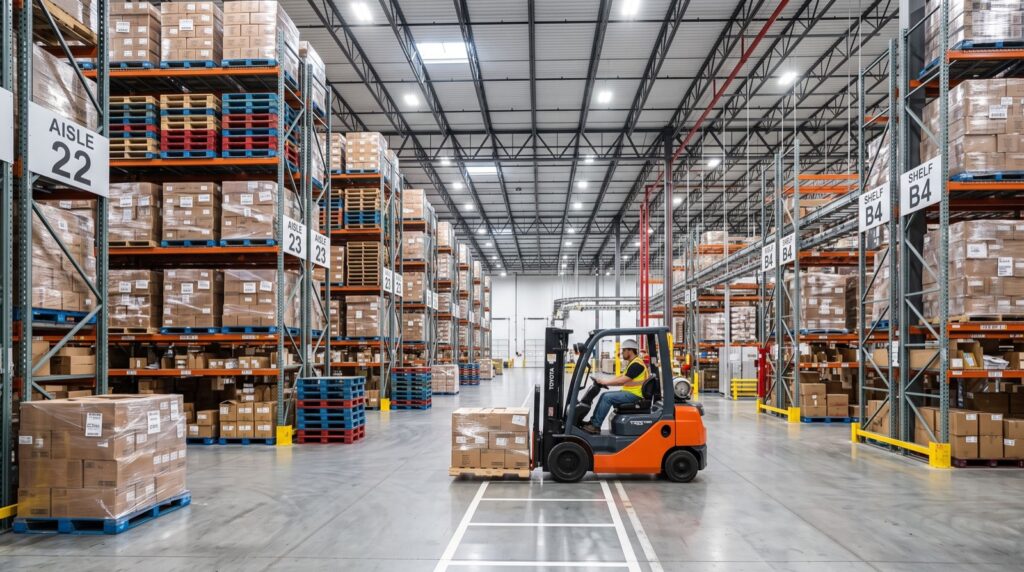
A well-run dry facility monitors conditions continuously, flags any drift before it becomes a problem, and keeps stock elevated and organised so that air can move freely around every pallet. The result is inventory that holds its value from the day it arrives to the day it ships out. For high-turnover items like accessories and consumer gadgets, that consistency translates directly into fewer write-offs and healthier margins.
Key Takeaways
- Storage conditions actively shape the quality and lifespan of sensitive electronics.
- Heat degrades batteries and adhesives, while humidity invites corrosion and short circuits.
- Damage from poor storage is often invisible until the product reaches the customer.
- Riyadh’s heat and dust make climate-controlled warehousing a strategic necessity.
- Dry storage is an actively managed low-humidity condition, not simply unrefrigerated space.
- Consistent conditions reduce warranty claims, returns, and lost margin.
Traceability and Handling Matter Too
Environmental control is only part of the equation. How goods are received, stacked, and picked has just as much bearing on their condition. Technology is heavy in value but light in tolerance, so it needs handling protocols that prevent drops, crushing, and static discharge. A good warehouse trains its teams to treat a carton of laptops differently from a pallet of bottled water.
Traceability adds another layer of protection. When each batch is logged, tracked, and rotated on a first-in, first-out basis, older stock never languishes at the back gathering age-related faults. This discipline matters enormously for products with a short commercial shelf life, where being three months behind the market can mean selling last season’s model at a discount.
Choosing a Warehouse You Can Trust
Not every facility that advertises climate control actually delivers it consistently, so the choice of partner deserves real scrutiny. Ask how conditions are monitored, how the building copes during a summer power event, and how the team is trained to handle fragile, high-value cargo. The answers reveal whether you are dealing with genuine specialists or simply a landlord with a thermostat.
Businesses that take the time to compare providers, visit sites, and study track records tend to find quality service providers who understand that storage is a form of protection, not just square metres. That mindset, more than any single piece of equipment, is what keeps a shipment of delicate technology safe from the moment it clears customs to the moment it lands in a customer’s hands.
Protecting Value From Dock to Doorstep
For anyone moving electronics through Saudi Arabia, the warehouse is where profit is quietly won or lost. A stable environment, careful handling, and disciplined stock rotation keep devices in the condition their makers intended, while a careless space slowly drains their worth. In a category where customers expect perfection out of the box, there is little room for compromise on the conditions in between.
The smarter path is to treat storage as an extension of the product itself. When temperature, humidity, and handling are managed with the same seriousness that goes into manufacturing, the goods that reach the market are exactly what they promise to be. In a fast-moving technology market, that reliability is not a luxury. It is the foundation of a business customers come back to.