Every mover has a story about the box that arrived rattling, and it is almost always the one packed in a hurry the night before. Learning how to pack fragile items for a move properly is the single skill that saves the most heartbreak, because a chipped heirloom or a shattered mirror cannot be undone. In 2026, with families relocating across Dubai and the wider UAE constantly, this is the knowledge that keeps memories intact.
I have unpacked thousands of boxes at the destination, and I can tell within seconds which ones were packed with care. The difference is not luck. It is technique, materials, and a bit of patience.
How to pack fragile items for a move without breakages
The golden rule is that nothing fragile should be able to move inside its box. Empty space is the enemy: if an item can shift, slide, or knock against a neighbour, it will eventually crack, especially on a bumpy UAE highway run.
Cushioning fills that space. Wrap each piece individually, nest it in a firm box, and pad every gap so the whole thing is snug. Professional crews, like the team behind villa movers JVT, carry proper materials rather than improvising with old newspaper.
The materials you actually need
- Sturdy double-walled boxes in small and medium sizes, not oversized cartons.
- Bubble wrap and foam sheets for individual wrapping.
- Packing paper for cushioning and filling gaps.
- Strong tape and a marker for sealing and labelling.
- Cell dividers for glasses, stemware, and bottles.
Packing glassware and crockery
Plates, glasses, and ceramics are the most-broken items in any move, but they are also the easiest to protect once you know the trick. Never lay plates flat, stand them on edge like records, which spreads the load and resists cracking.
Wrap each plate and glass separately, use cell dividers for stemware, and fill hollow items like cups and vases with crushed paper for internal support. Keep these boxes small so they never get too heavy, and mark them clearly on every side.
Are electronics really that fragile?
People underestimate electronics because they look solid, but screens, hard drives, and internal connections are delicate and heat-sensitive, a real concern in the UAE climate. A television or monitor that survives a drop may still fail from a hard jolt in transit.
Where possible, use the original boxes, which are moulded to protect the device. If those are gone, wrap the screen in a blanket, brace it upright, and never lay a flat-panel TV face-down. For guidance on protecting sensitive equipment, standards from bodies such as the International Organization for Standardization on packaging and transit testing reflect the same principles a careful crew applies: cushion, immobilise, and label as fragile.
Mirrors, art, and awkward shapes
Framed art and mirrors need edge protection above all. Tape a large X across the glass to hold it if it cracks, add corner protectors, wrap the whole piece in bubble and a moving blanket, and transport it standing upright between padded items.
Lamps, chandeliers, and decorative pieces should be dismantled where possible, with bulbs and shades packed separately. A crew of trusted professionals will crate genuinely valuable or irreplaceable pieces rather than trust a blanket alone.
Community and access also shape how fragiles travel. A move through narrow shared corridors, of the kind movers in International City navigate daily, means breakables face more turns and lift transfers, so each one deserves an extra layer of padding before it leaves the shelf.
Building a fragile-only zone
One habit that saves more breakages than any single material is separation. Keep all your fragile boxes in one clearly marked corner of each room, away from the heavy furniture traffic, so the crew never has to reach over them or set a wardrobe down on top of a box of stemware.
Pack these boxes last and unpack them first. That way the delicate cartons spend the least time in the truck and are inspected the moment you arrive, while the memory of how they were packed is still fresh if a claim is ever needed.
Labelling and loading fragile boxes
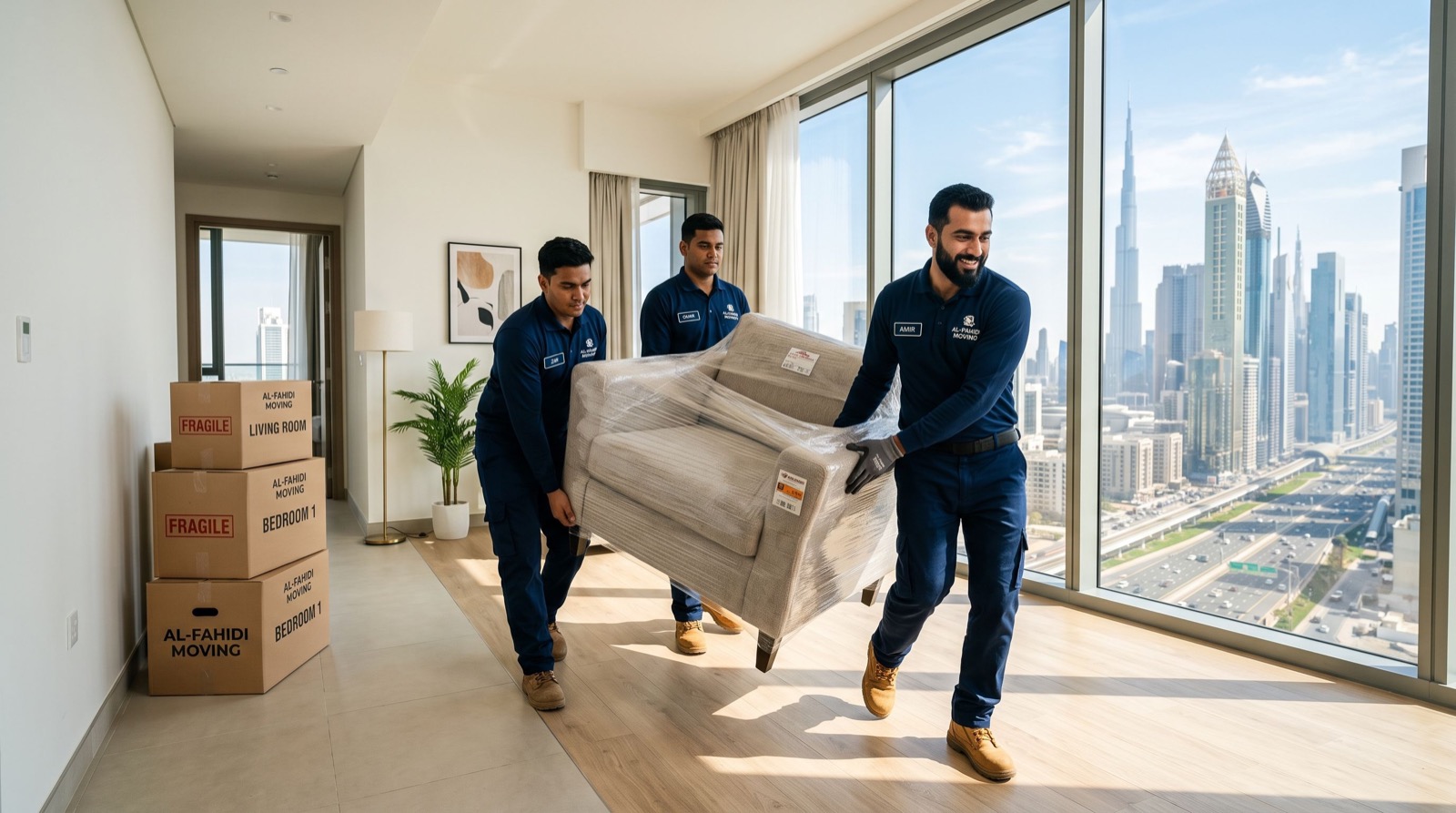
A fragile box is only as safe as the box stacked on top of it. Mark every fragile carton clearly on all sides and on top, note “this way up,” and tell the crew which boxes hold breakables so they load them last and high.
- Pack fragiles in small, firm boxes that will not sag.
- Label all sides with “Fragile” and the destination room.
- Load them on top of heavier, sturdier boxes in the truck.
- Never let anything heavy rest on a fragile carton in transit.
- Unpack breakables first at the new home to check for any damage.
Fragile-packing quick reference
| Item | Wrap with | Position | Box size |
|---|---|---|---|
| Plates | Paper, each one | On edge, vertical | Small |
| Glasses | Bubble + dividers | Upright in cells | Small |
| TV / monitor | Blanket, original box | Upright, braced | Original |
| Mirror / art | Corner guards + blanket | Standing upright | Flat carton |
Frequently Asked Questions
What is the best way to pack fragile items for a move?
Wrap each item individually, place it in a small, firm box, and fill every gap with cushioning so nothing can shift. Label the box as fragile on all sides and load it high in the truck with nothing heavy on top.
How do I pack plates so they don’t break?
Wrap each plate in paper and stand them on edge, vertically, rather than stacking them flat. Standing plates on their sides distributes pressure and resists the cracking that flat stacks suffer over bumps.
Should I use original boxes for electronics?
Yes, whenever you still have them. Original packaging is moulded to protect the device during transit. If it is gone, wrap the screen in a blanket, keep it upright, and mark the box fragile and heat-sensitive.
Can I pack fragile items myself or should I hire packers?
You can pack sturdy fragiles yourself with the right materials, but for valuable, glass, or irreplaceable items a professional packing service is worth it. Trained crews carry proper crates and cushioning and take responsibility for what they pack.
The bottom line
Knowing how to pack fragile items for a move is the difference between unpacking treasures and sweeping up shards. Use proper materials, wrap individually, kill the empty space, label clearly, and load smart. Do that, or hand it to a careful crew, and your delicate belongings reach their new UAE home in 2026 exactly as they left.